Xiaoxuan Huang is a Shanghainese-Canadian writer, scholar, and educator whose work bridges poetry, critical theory, and queer autotheory. They earned a BA(Hon.) in English Language and Literature from Queen’s University, and an MFA in Creative Writing from the University of British Columbia (Okanagan). They currently teach English Literature and Creative Writing at Capilano University in Vancouver.
Mixed Form (Poetry & Epistles)
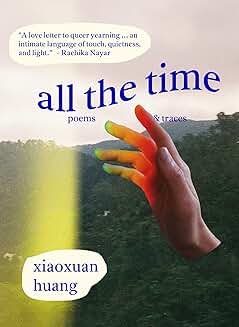
All the Time: Poetry & Traces
Montreal: Metatron Press, 2026.
Forthcoming April 2026.
Publisher’s Synopsis (From its website)
In all the time: poems & traces, Xiaoxuan Huang crafts a profound exploration of queer longing, the fragility of language, and the spaces between speech and silence. Blending love letters, fragmented aphorisms, and poems where silence itself becomes a punctuation mark, this genre-defying collection asks: If words can never fully capture what we mean, do we still dare to speak?
Rooted in poetic rigor and philosophical inquiry, all the time insists on the urgency of address, even when words falter. It is poetry that thinks as deeply as it feels, inviting readers to linger in the liminal spaces between breath, memory, and meaning. For those who seek works that blur the lines between theory and heartache, this is a luminous testament to the necessity of speaking—even when the destination remains unknown.
Mixed Form (Poetry & Auto-theory)
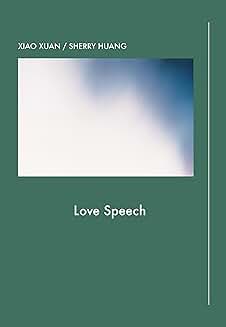
Love Speech
Issued under the name: Xiao Xuan/Sherry Huang.
Montreal: Metratron Press, 2019.
Publisher’s Synopsis (From its website)
Love Speech is an auto-theoretical book that reads both like poetry and an epistle; a textile of literary mothers shot through with cultural-political feelings, threads of conversation, and moments from queer life. Love Speech takes it titles from an ethics of addressability that Judith Butler originally raises to examine what makes language such as hate speech hurtful. “Our very being exposes us to the address of another,” she says (via Claudia Rankine’s account in Citizen: An American Lyric.) Butler considers the inverse in several conversations, and Huang, too, is more devoted to theorizing and enacting love speech further.