Skip to main menu Skip to content
Spring/Summer hours (May 4 - Sept. 7): Monday to Friday 9am - 4pm, by appointment only. To schedule an appointment, please fill out our appointment form or email us at asc@torontomu.ca

Cosmetology, Barbering, and Goldsmithing – a look back at Ryerson’s first programs

Toronto Metropolitan University offers more than 100 undergraduate and graduate programs, and is home to more than 40, 000 students and 2700 staff and faculty.  But how many students attended Ryerson the first year it opened?  What kinds of courses were available for students to take and are any of them still offered today? Let’s take a look back at the first year of the Ryerson Institute of Technology.

1948-1949
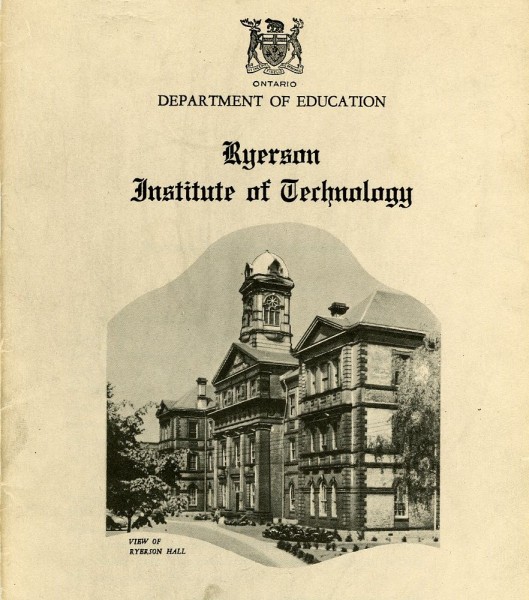
1948 Course Calendar, image
1948 Course Calendar

When the Institute opened its doors to approximately 200 students in September of 1948, it was one of four technical institutes run by the Department of Education for the Province of Ontario. The other 3 were: The Institute of Textiles (Hamilton); The Institute of Mining (Hailebury); and The Lakehead Technical Institute (Port Arthur).

It offered 4 different options for education: technological courses;  extension courses; courses supervised by Department of Education for other governmental departments; and courses for the University of Toronto.

Technological courses

There were 10 schools that first year that offered 2 year diploma and certificate courses on the level between high school and university. Admission requirements were a minimum of a grade 12 education or an equivalent standing based on age, practical experience, and educational background. Fees were a $5 registration fee, a $25 tuition, a $10 laboratory or shop fee, and a $10 Students’ council fee.  For non-resident British subject students tuition was $200, and for non-resident non-British subject students tuition was $300.

The schools were:
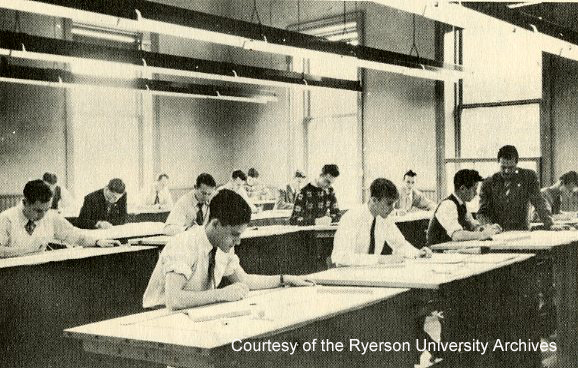
Architecture

School of Architectural Draughting – architectural and structural draughting and design
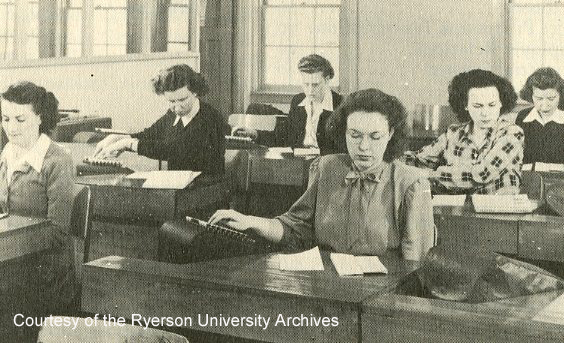
Business machines

School of Business – retail merchandising and business machines
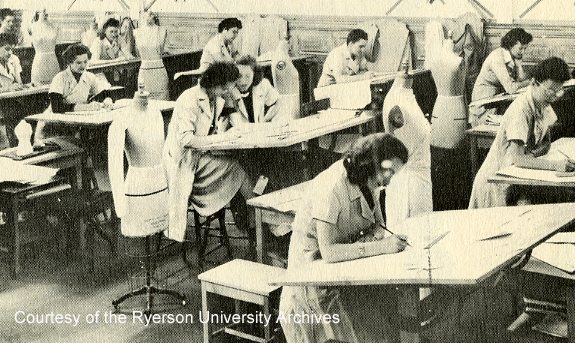
Costume Design

School of Costume Design – dressmaking, pattern making, draping, and designing
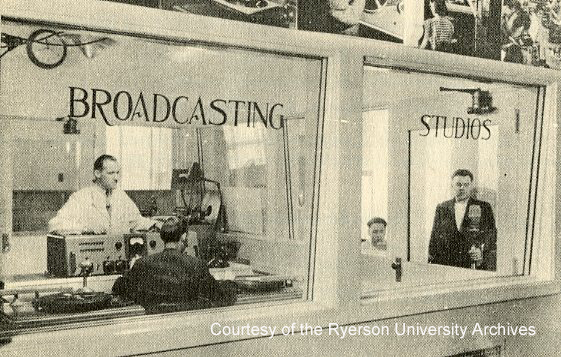
Electronics

School of Electronics – radio communications, radio and appliance servicing, industrial electronics, electronic laboratory practice, marine operating, announcing and production

School of Food Technology – commercial cooking and commercial baking
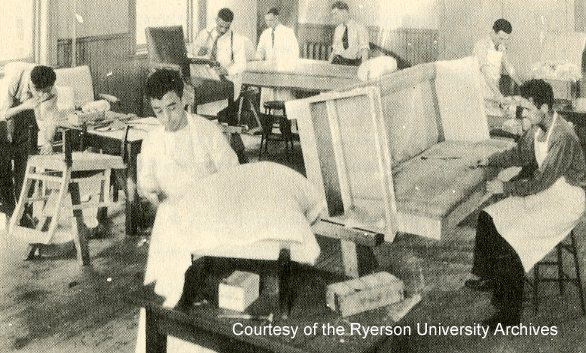
Furniture Crafts

School of Furniture Crafts – cabinetmaking, upholstering, wood finishing, and furniture design
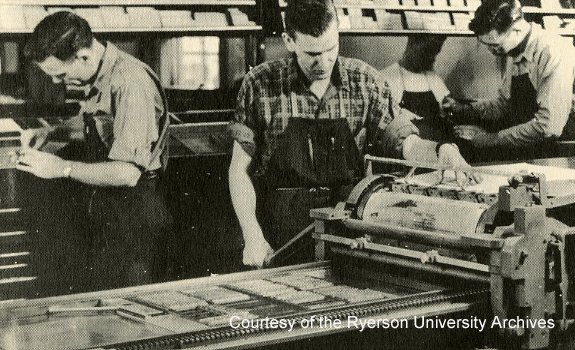
Graphic Arts

School of Graphic Arts – hand composition and typography, letterpress presswork, linotype, intertype, monotype, photo lithography, offset presswork, printing design and layout, bookbinding, and journalism
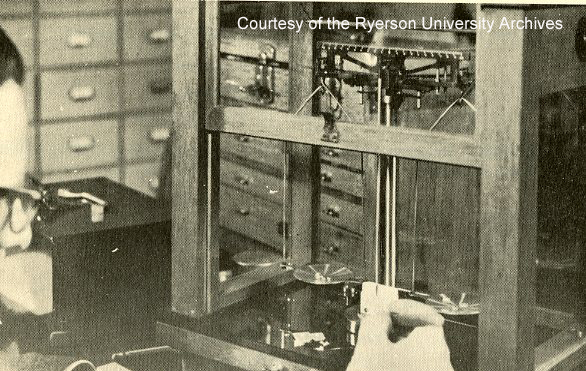
Jewellery making

School of Jewellery and Horology – goldsmithing and gem setting, watch making and repair
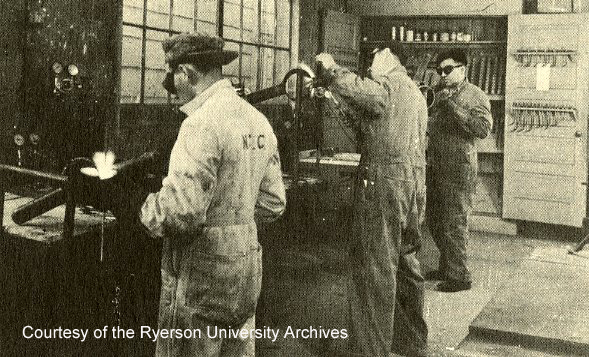
Welding Fabrication

School of Industrial and Mechanical Technology – general mechanical, tool design, tool and die making, mechanical drafting, and welding
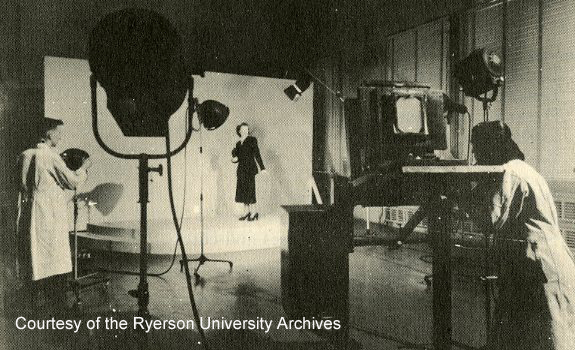
Photography

School of Photography – portraiture, commercial, and industrial

With the exception of the School of Jewellery and Horology, all of these schools evolved into programs offered by Ryerson today.

Extension Courses

Ryerson also offered 2 extension courses at the trade level. They were Men’s tailoring, and Women’s tailoring. The  Admission requirements were a grade 10 or equivalent education and you had to be at least 16 1/2 years old. Course fees were the same as the Technology courses.
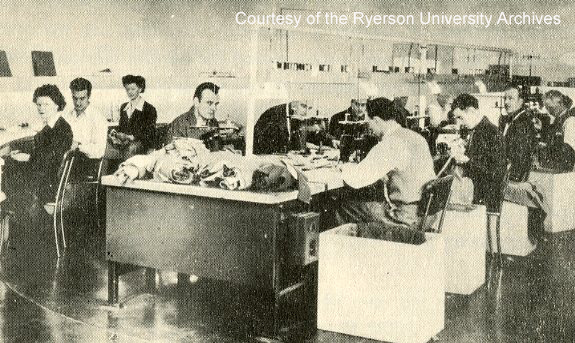
Women's Tailoring, image
Women’s Tailoring

The extension department evolved in to the present day G. Raymond Chang School of Continuing Education. The school now offers 88 certificate programs, and accreditation courses for 10 professional institutes and associations.

Department of Education supervised courses

Housed at Ryerson were courses offered by the Department of Labour and the Department of Health, which varied in length from 2 months to 9 months. Admission requirements, course of study, standards of attainment, and final exams were the responsibility of the sponsoring department. The Department of Education supplied the staff and supervised the courses. All the courses were trade courses. They were:

Department of Labour

Apprenticeship courses in building trades, millroom, and motor vehicle repair trade (2-3 months)

Barbering (9 months)
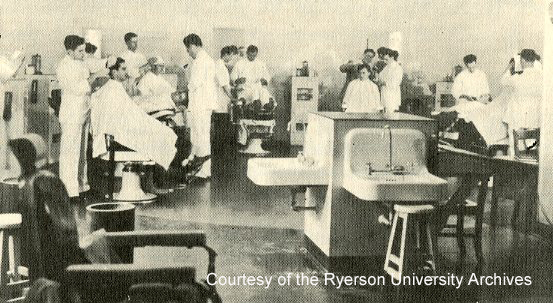
Barbering, image
Barbering

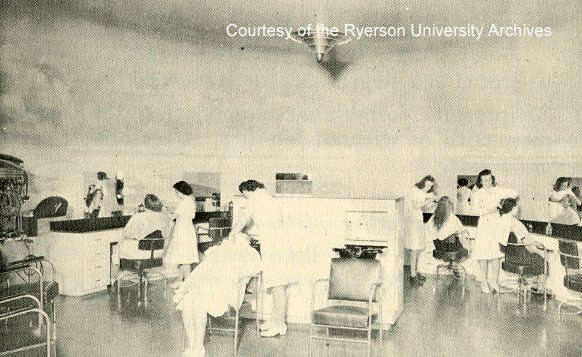
Hairdressing (9 months)

Cosmetology, image
Cosmetology

Stationery Engineering (9 months)

Department of Health

Certified Nursing Assistant course (9 months)

Courses for the University of Toronto

Offered by Ryerson, in co-operation with the University of Toronto, were 2 courses for their students.

Occupational Therapy – printing and woodworking

Institutional Management – commercial cooking

To learn more about Ryerson’s beginnings drop by Archives and Special Collections on the 4th floor of the Library in LIB 404
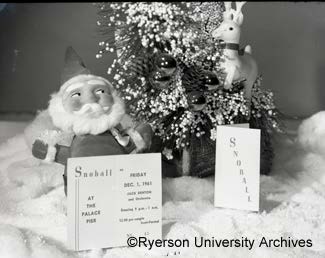
Happy Holidays from the Toronto Metropolitan University Archives and Special Collections

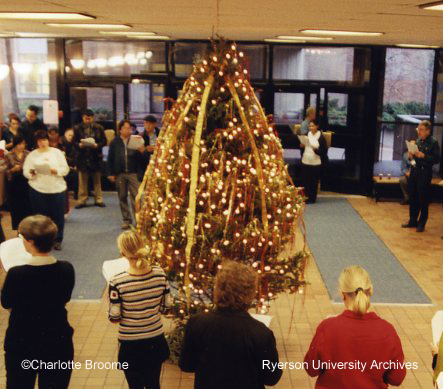
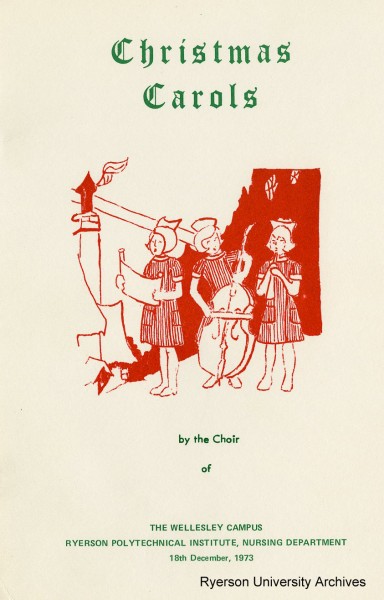
As 2014 winds to a close, we looked into the Archive’s collections to see how the holidays were celebrated in days of Ryerson past.

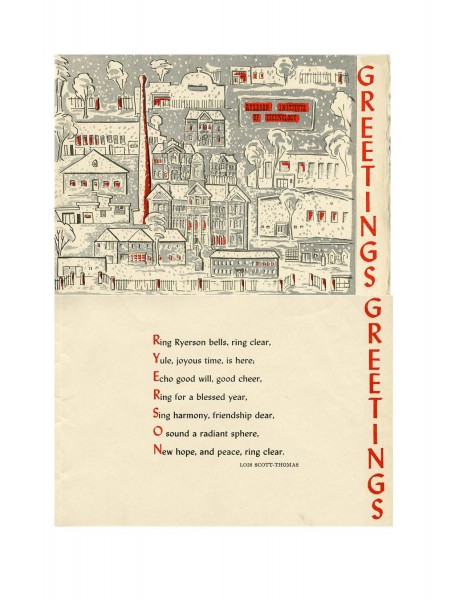
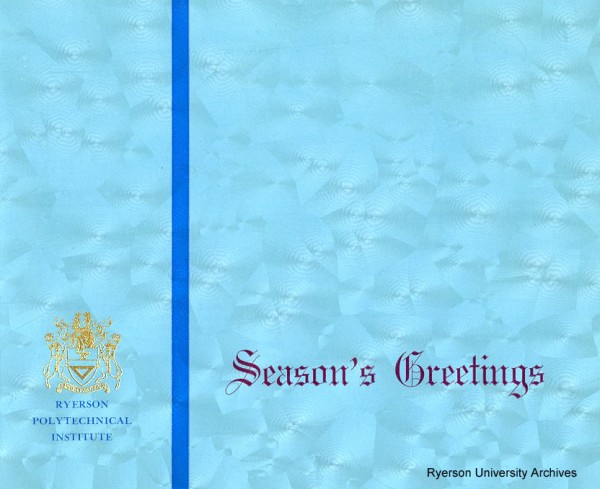
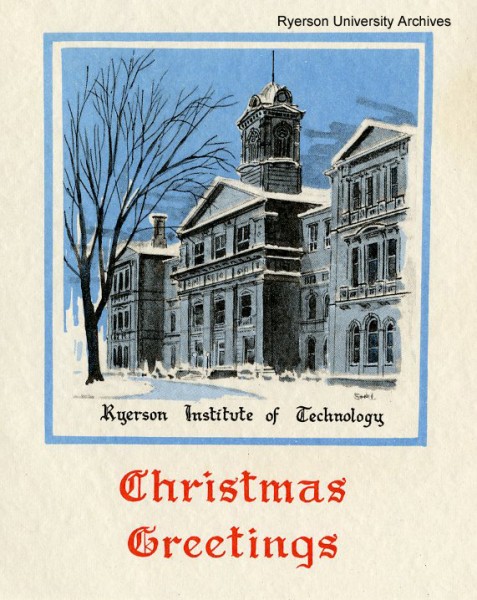
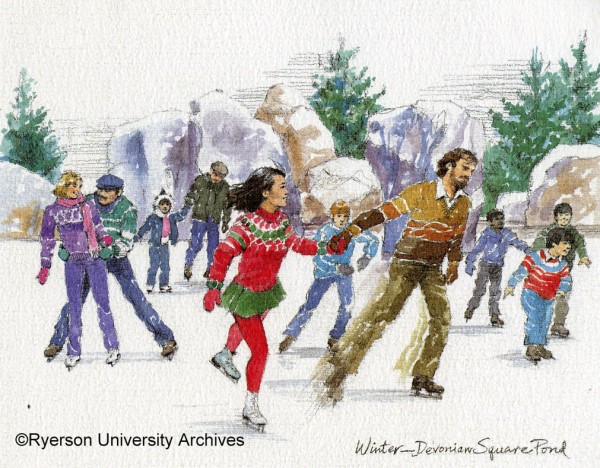
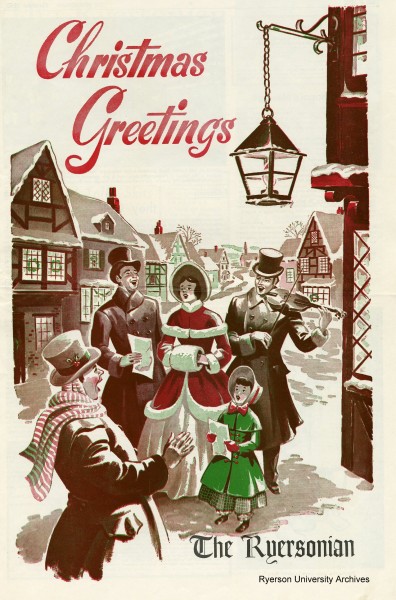
Here are a selection of Holiday cards mailed out by the School.

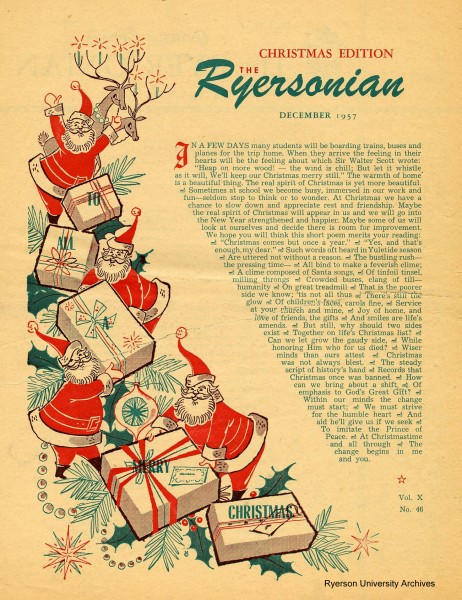
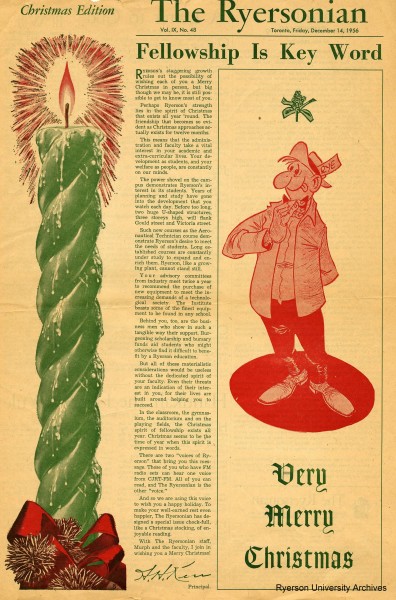
A series of Ryersonian Newspaper covers from years past.

 The staff at the Ryerson Archives & Special Collections wish everyone the Happiest of Holiday Seasons and best wishes for the New Year. Hope to see you in 2015.

Did you know – Ryerson beyond the City

Did you know that Ryerson used to have a Rural centre and a ski lodge?

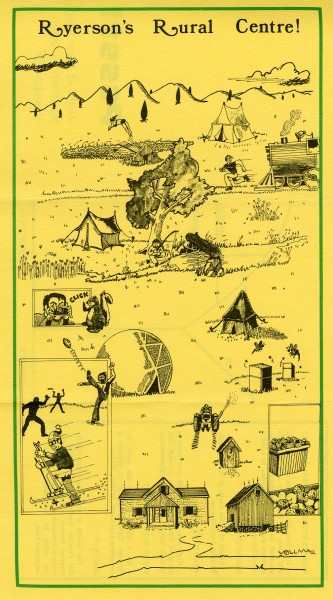
The Ryerson Rural Centre or Farm was located in Millbrook, about 19 km south of Peterborough. The 200 acre site was purchased in 1972 and was available for the Ryerson community to use. Activities included orientation, departmental seminars, and retreats. The farm house was equipped for over night rentals and cost an economical $2 per night.  It was sold in 1980.

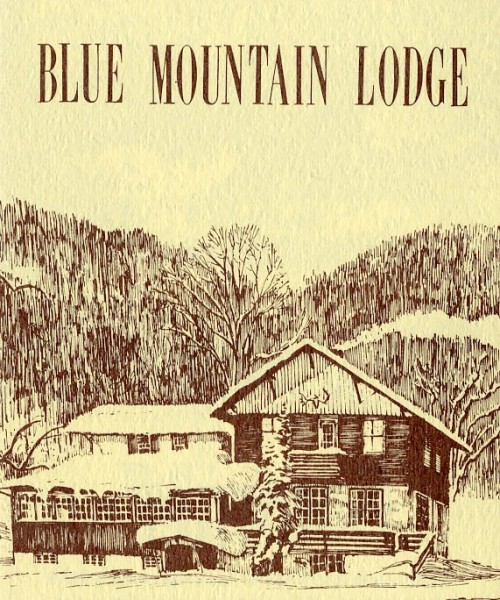
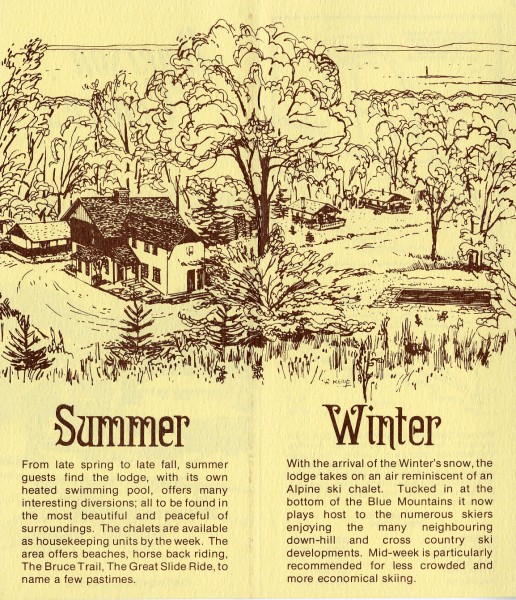
The Ryerson Blue Mountain Lodge was located just outside of Collingwood. The 7.5 acre resort, which was purchased in 1975, consisted of a central lodge, 4 chalets and boasted an outdoor heated pool. It was also available for booking by all members of the Ryerson Community and was accessible year round. It was sold in 1983.

To learn more about the farm and the lodge or to find out things about Ryerson you might not have known stop by Ryerson Archives & Special Collections located on the 4th floor of the Library in LIB404
The Changing Campus – 66 Years of Building Ryerson

Ryerson’s campus is a work in progress. Since the school’s inception in 1948, it has been slowly increasing its footprint in the downtown core through acquisition, demolition, renovation, and original construction. From the original Department of Education Buildings the campus has pushed East to Jarvis Street, South to Dundas Street, West to Yonge Street with the new Student Learning Centre, and further West with the Ted Rogers School of Management at Bay and Dundas Streets.

The following photographs are highlights from the new Archives and Special Collections exhibit documenting Ryerson’s 66 year evolution.

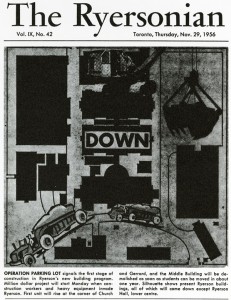
Ryersonian front page news story about the start of demolition and construction for Howard Kerr Hall.The Ryersonian November 29, 1956, image
Ryersonian front page news story about the start of demolition and construction for Howard Kerr Hall.
The Ryersonian November 29, 1956
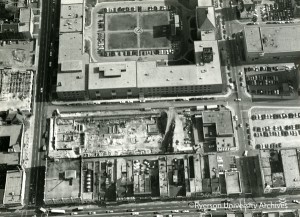
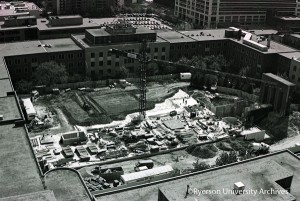
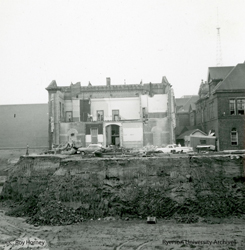
Demolition of buildings along Victoria Street, making way for Unit 1 (Jorgenson Hall) and the Podium building. The Library site has not yet been cleared.(RG 122.10.092), image
Demolition of buildings along Victoria Street, making way for Unit 1 (Jorgenson Hall) and the Podium building. The Library site has not yet been cleared.
(RG 122.10.092)
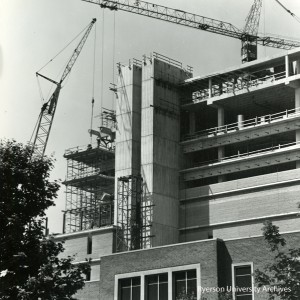
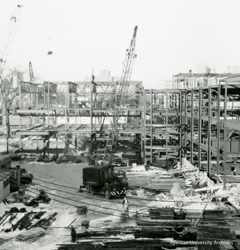
Contruction of Jorgenson Hall and the Podium Building.(RG 122.10.098), image
Contruction of Jorgenson Hall and the Podium Building.
(RG 122.10.098)
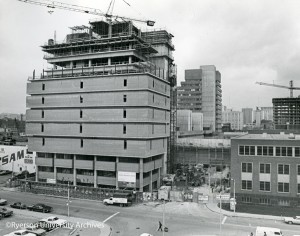
The Library building under construction. You can see the Sam the Record Man building in the bottom left hand corner of the photo.(RG 122.10.093), image
The Library building under construction. You can see the Sam the Record Man building in the bottom left hand corner of the photo.
(RG 122.10.093)
Construction of the Ryerson Athletic Centre (RAC). This was Ryerson's first green roof building.(RG 76.14.235), image
Construction of the Ryerson Athletic Centre (RAC). This was Ryerson’s first green roof building.
(RG 76.14.235)
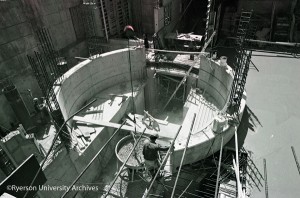
Construction of the rotunda at the front entrance of the RAC. Patrons will eventually enter into the building through the facade of the old Ryerson Hall Building.(RG 76.14.235), image
Construction of the rotunda at the front entrance of the RAC. Patrons will eventually enter into the building through the facade of the old Ryerson Hall Building.
(RG 76.14.235)
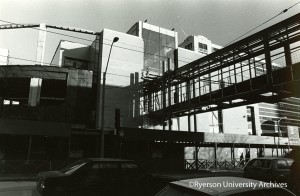
The Rogers Communications Centre and bridge over Church Street. The bridge connects the RCC with Howard Kerr Hall.(RG 76.14.264), image
The Rogers Communications Centre and bridge over Church Street. The bridge connects the RCC with Howard Kerr Hall.
(RG 76.14.264)
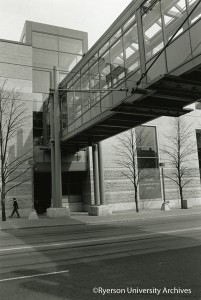
Completed bridge between Howard Kerr Hall and the Rogers Communications Centre.(RG 76.14.1053), image
Completed bridge between Howard Kerr Hall and the Rogers Communications Centre.
(RG 76.14.1053)
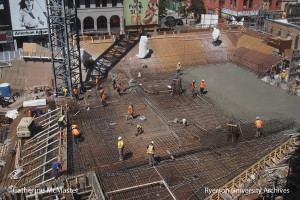
Construction workers pouring concrete for main floor of new Student Learning Centre., image
Construction workers pouring concrete for main floor of new Student Learning Centre.
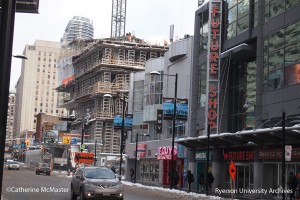
The changing corner of Yonge and Gould Streets., image
The changing corner of Yonge and Gould Streets.

The exhibit runs from April 11 to June 30th and is located on the 4th floor of the Library in the Special Collections windows.

A campus reborn: The Roy Horney photographic collection

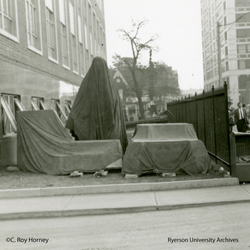
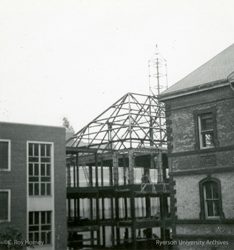
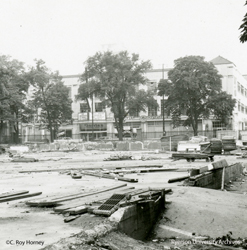
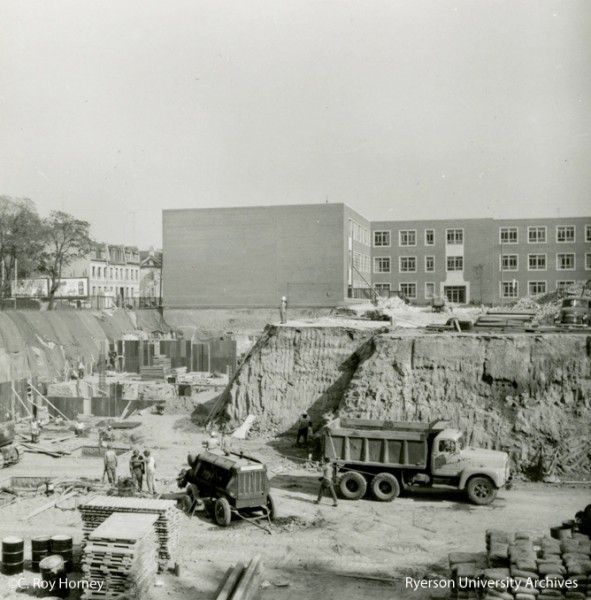
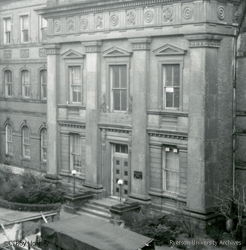
The Ryerson campus is in a constant state of growth and change. The last several years have been exciting ones with the re-opening of the Image Arts Building, The Mattamy Athletic Centre, and the construction of the Student Learning Centre. But what about the first major change to the Ryerson campus – the construction of Howard Kerr Hall?

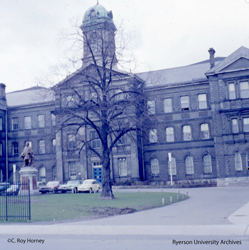
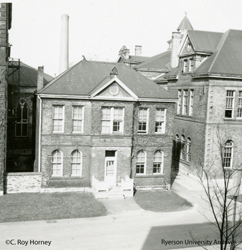
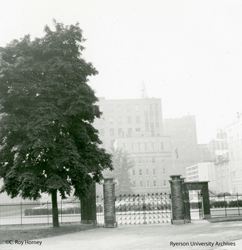
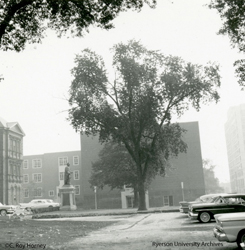
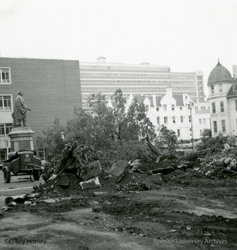
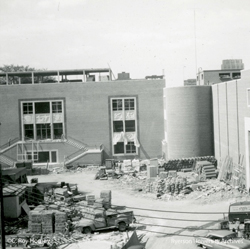
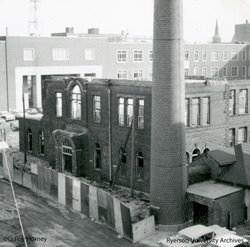
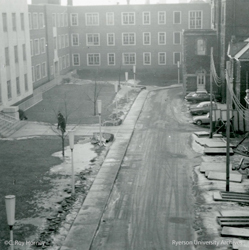
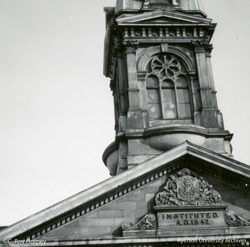
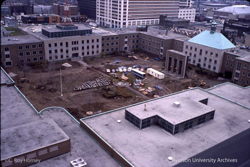
Through the donation of a scrapbook of photographs and some of the hundreds of slides, taken by former faculty member Charles Roy Horney to the Ryerson Archives, we see the transformation that began with the demolition of the Toronto Normal School buildings and the construction of Howard Kerr Hall.

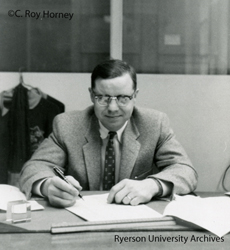
C. Roy Horney seated at his desk.(May 1957)(F 536.15.01.06), image
C. Roy Horney seated at his desk.
(May 1957)
(F 536.15.01.06)

Charles Roy Horney started teaching math and physics at Ryerson in 1952, and worked here until his retirement in 1983. During his time at Ryerson he acted as departmental head, assistant chairman and even the Registrar. He was also the coach of the Ryerson Zebras – the early men’s soccer team.

His photographs allow us to piece together a timeline of demolition and construction that was previously unknown to Archives staff.  Here is a sample of the images:

This amazing collection of photographs is now available for viewing in our database.

This Alumni weekend – come journey down memory lane…

IMG_0224
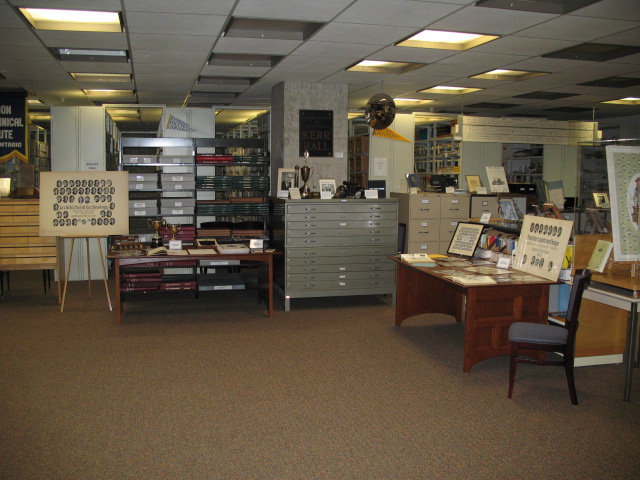
The Toronto Metropolitan University Archives will be open on Saturday October 5th from 10 am and 5 pm with special Alumni weekend exhibits.

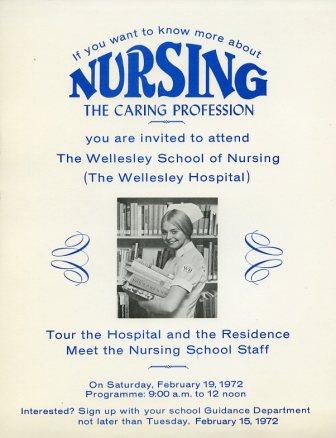
The Wellesley Hospital School of Nursing celebrates its centennial!

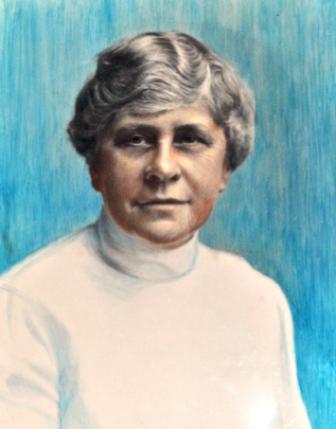
Although the Wellesley Hospital School of Nursing graduated its last class in 1975 when it officially became part of Ryerson’s School of Nursing, we celebrate its history and spirit – kept alive by its active and dedicated Alumnae Association – on what would have been its 100th anniversary year.

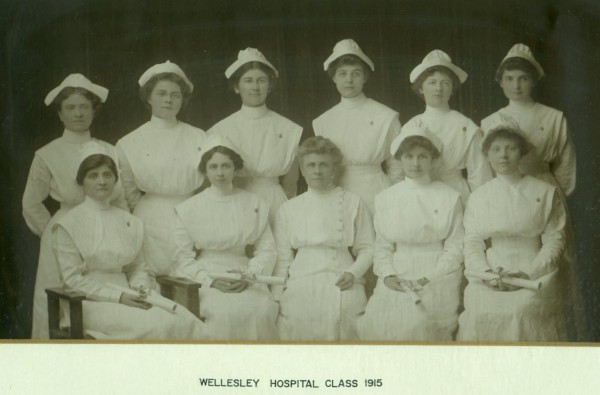
The school opened in 1912, with the official opening of the Hospital, It graduated its first class of 10 nurses in 1915, and its last class of 71 nurses in 1975.  In between it graduated 2083 nurses. Its Alumnae Association was created in 1915 and is still active today.  In 2011 The Association donated its collections of papers and artifacts to the Toronto Metropolitan University Archives (see earlier blog post Wellesley Alumnae donation )

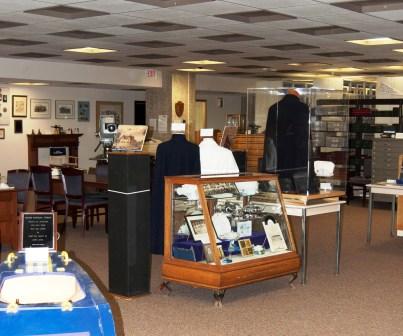
To celebrate Wellesley’s centennial, the Ryerson Archives has created an exhibit and slide show. Both will be available for viewing in the Archives until the end of September.  The Archives will be open for Alumni weekend on Saturday September 22. Contact us at (416) 979 5000 ext. 7027 to find out opening times for that day. Please enjoy the images included below – some are from the exhibit itself, and others are taken from the collection.

Are you a Wellesley grad?  Was someone in your family a Wellesley girl? You can now email The Wellesley Hospital School of Nursing Alumnae Association at: thewellesleyschoolnsgtoronto@gmail.com

Parades and Picnics from Ryerson’s Past!

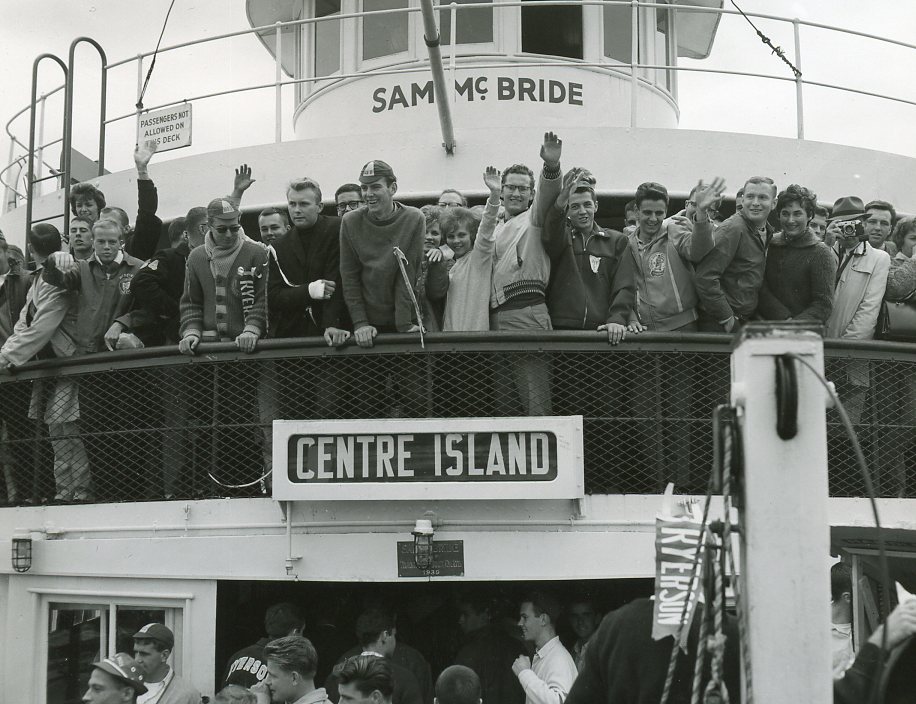
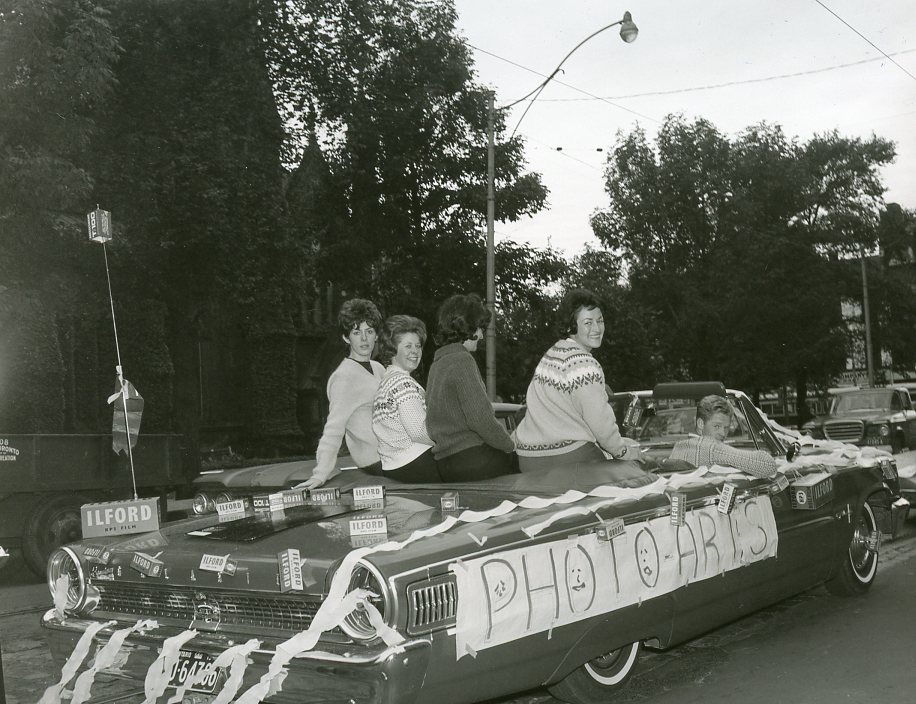
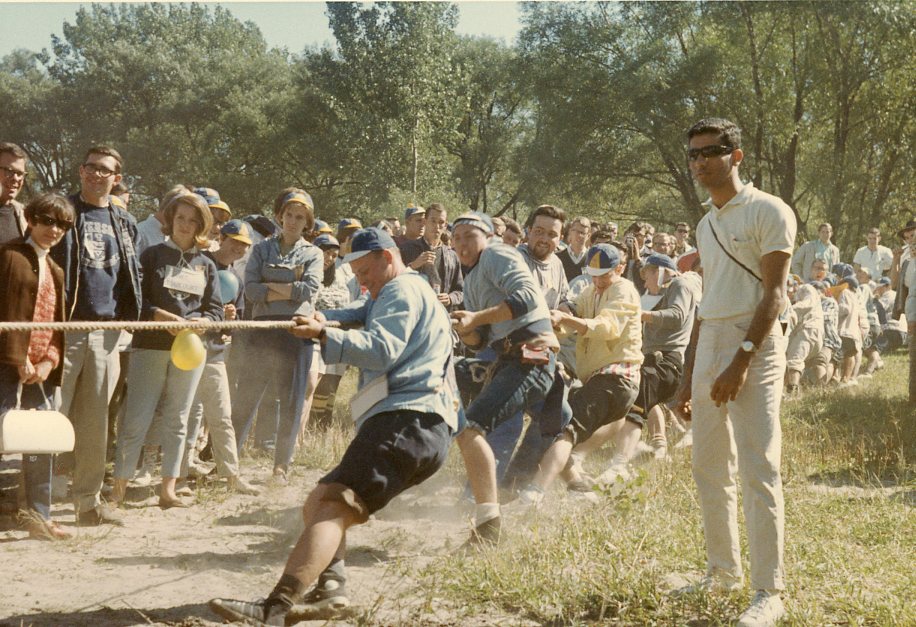
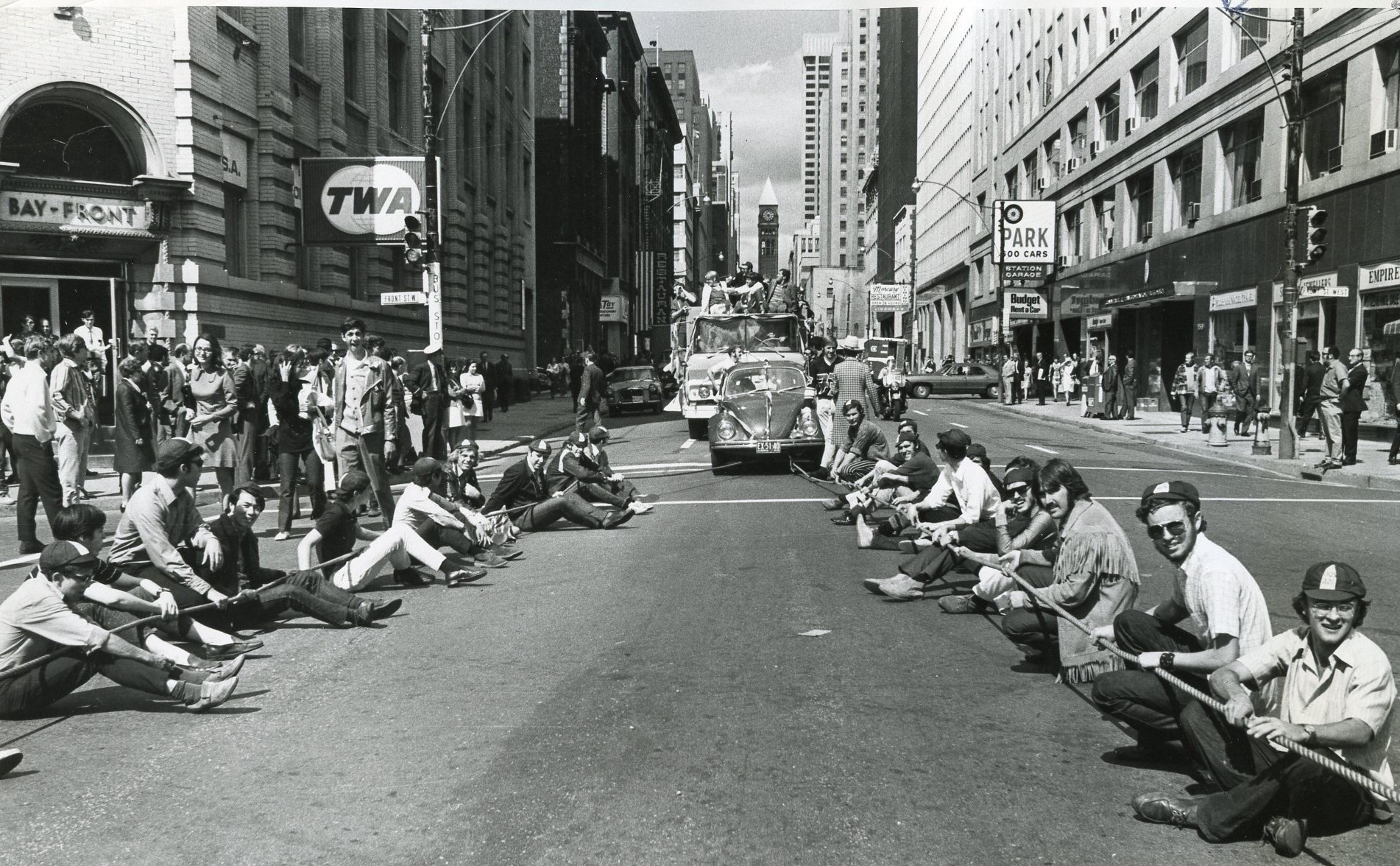
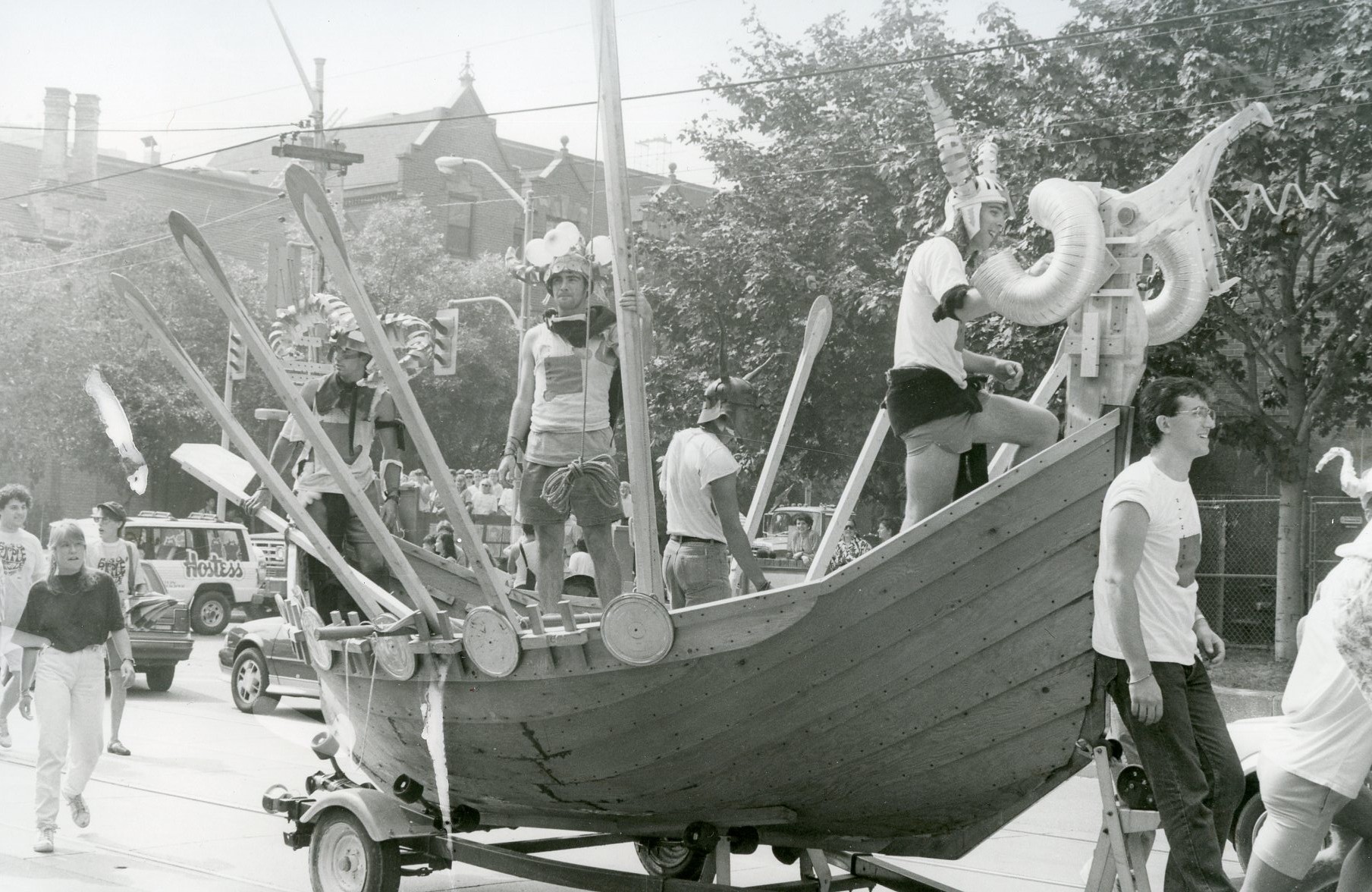
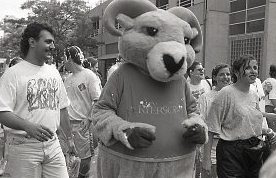
It is almost that time of year again…time for Ryerson’s parade and picnic.  The annual event has students marching down Yonge Street to catch the ferry for a day of music and fun on Toronto Island.  In honour of this rite of passage for all Ryerson students, please enjoy this selection of images of parades and picnics from decades past.

Feature from the Collection: The Wellesley Hospital School of Nursing

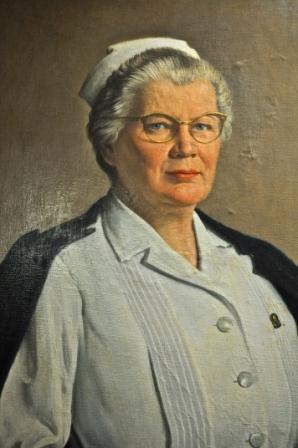
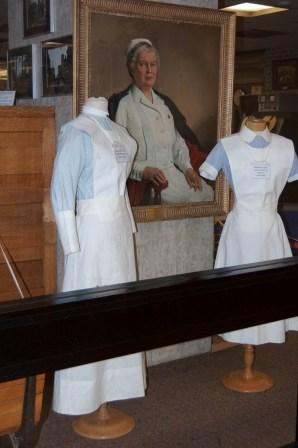
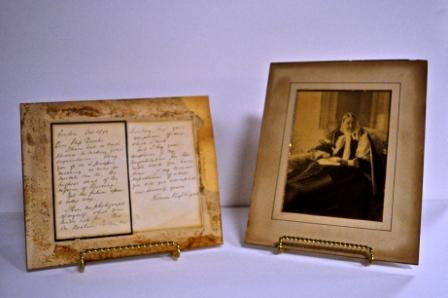
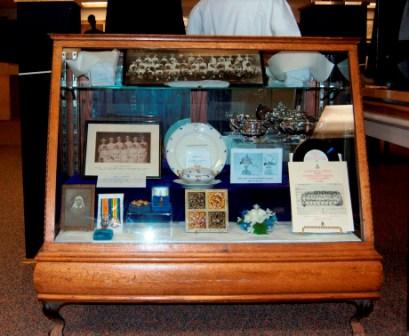
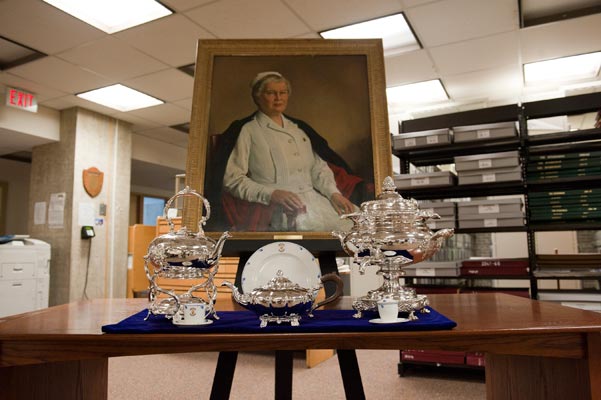
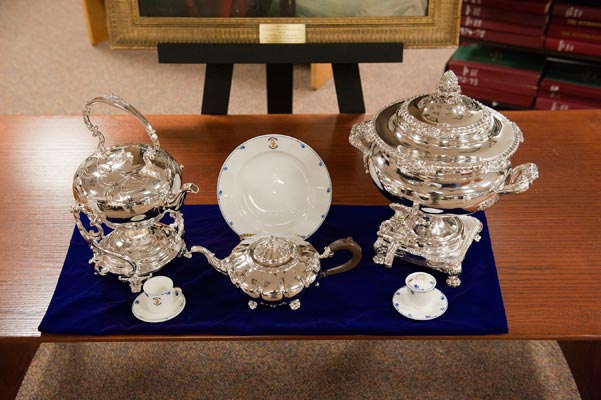
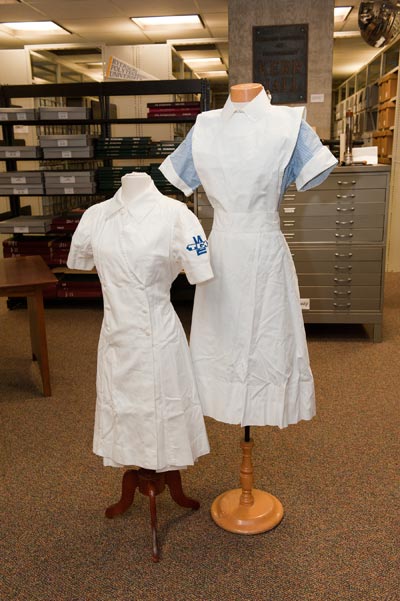
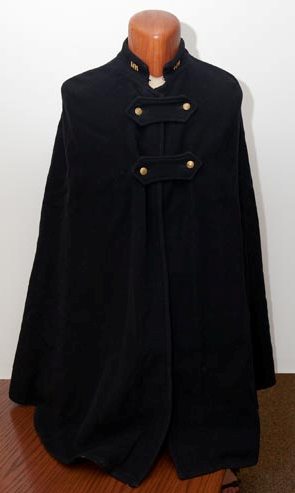
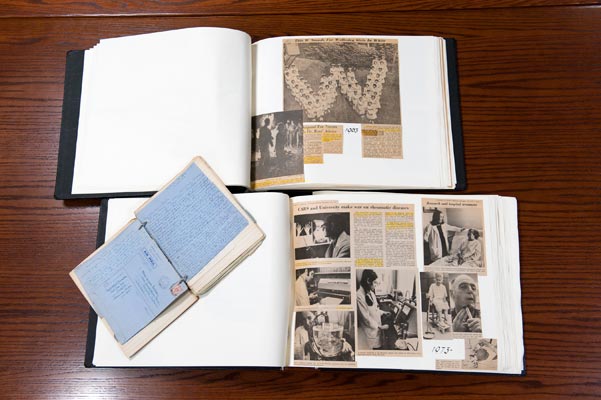
The Archives latest acquisition is The Wellesley Hospital School of Nursing collection.  Donated by their Alumnae Association, this collection includes such wonderful items as a scrapbook from World War II, photographs of almost every graduating class, uniforms and a beautiful silver tea set.

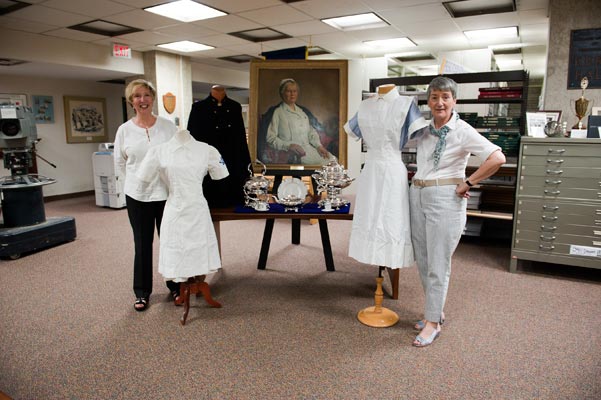
On the left is Linda Cooper Wellesley '68 - Associate Director, Collaborative Degree Program Daphne Cockwell School of Nursing and on the right is Shirley Heard Wellesley '62 - Alumnae Association President. Also in the picture is a small part of the collection now housed in the Toronto Metropolitan University Archives. Photo courtesy of University Advancement., image
On the left is Linda Cooper Wellesley ’68 – Associate Director, Collaborative Degree Program Daphne Cockwell School of Nursing and on the right is Shirley Heard Wellesley ’62 – Alumnae Association President. Also in the picture is a small part of the collection now housed in the Toronto Metropolitan University Archives. Photo courtesy of University Advancement.

The Wellesley Hospital officially opened on August 27, 1912 – with the Nursing School starting the same year.  The first class of graduates left the school in 1915.

The School graduated its last class in 1975.  Two years previous, the Ontario government mandated that nursing schools be taken out of the Hospitals and placed into Colleges of Applied Arts and Technology.  The Wellesley school was moved to Ryerson Polytechnical Institute, along with the school’s from Sick Kid’s Hospital and Women’s College Hospital, and amalgamated with Ryerson’s School of Nursing.

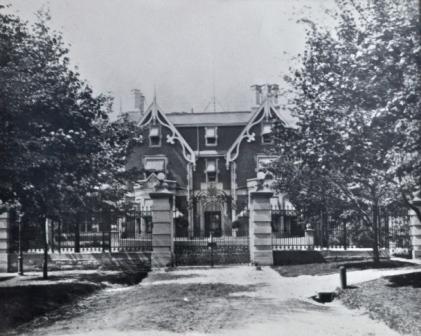
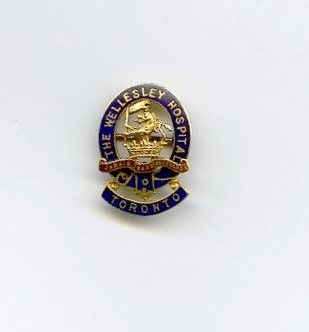
The following are some photographs of items in the collection. Stay tuned for further blog posts on The Wellesley Hospital School of Nursing collection as we come closer to their 100th Anniversary in August of 2012.

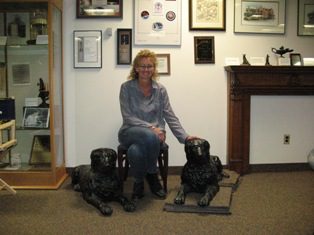
Name the Dog Contest – And the winner is…

After 3 weeks of submissions and much debate by our panel of judges:

The second runner up in our contest is Debra-Jo Sujka of the Library.  She submitted the names Victoria and Gould for the location of the library where the dogs are now housed.

The first runner up is Deanne Wright in the Registrar’s Office. She submitted the names Mente and Artie – for Ryerson’s Motto “Mente et Artificio” (With Mind and Skill).

And the winner of the Toronto Metropolitan University Archives Name the Dog contest is……………………

Daisy and Risis submitted by Marion Sharp of Human Resources.

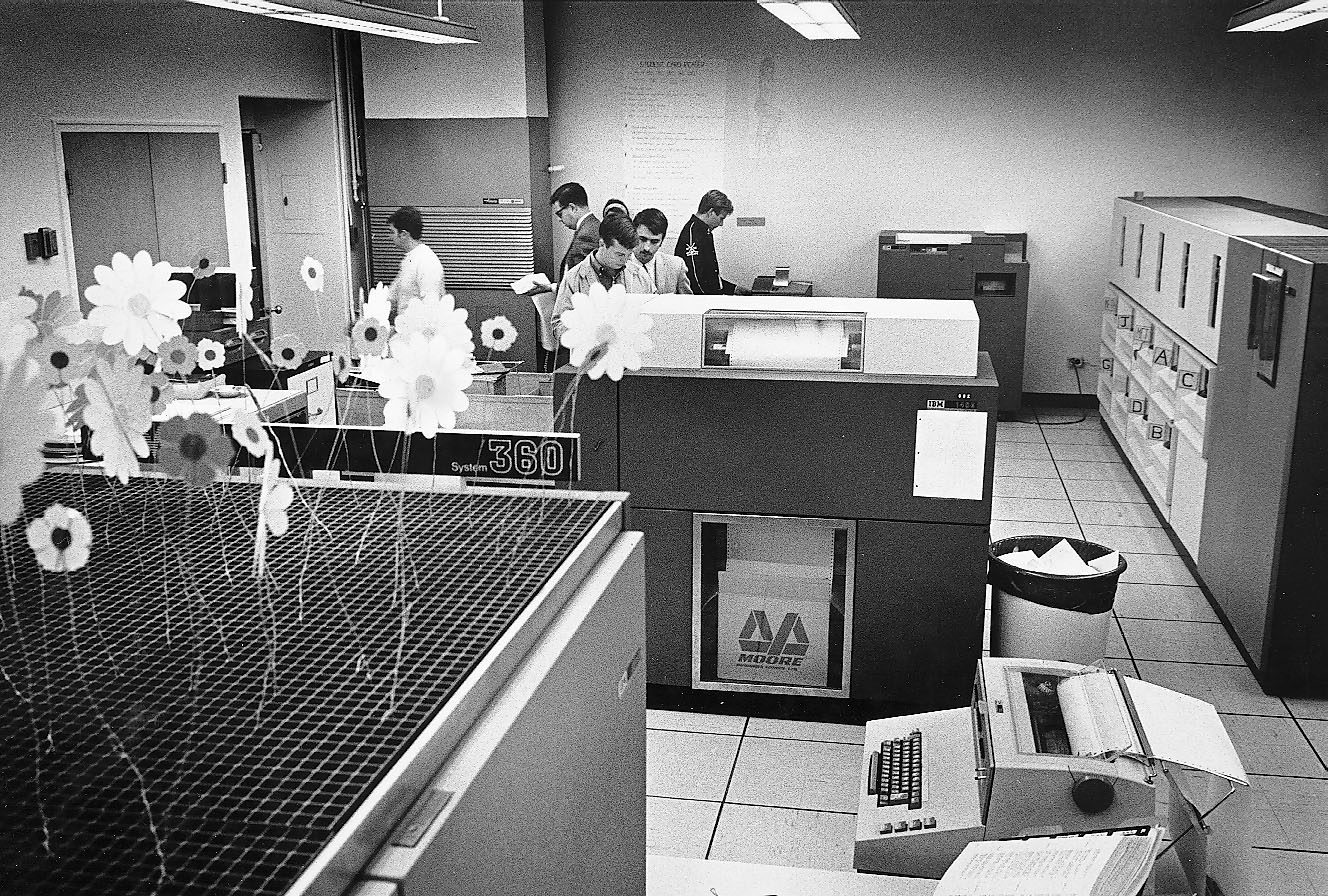
Marion selected the name Daisy after Ryerson’s first general purpose computer – An IBM 360-model 30 christened DAISY ( “Direct Access Information System”). Its functions were varied and included student registration, payroll, grade reporting, library circulation control, academic support and student directories.

Marion also chose the name RISIS, after the Ryerson Integrated Student Records System. This system was designed by Ryerson for maintaining student record information.  RISIS II was implemented in 1984. In 2005 the RISIS system was replaced by Peoplesoft.

Thank you to all the people who submitted names for our contest.

chat loading...