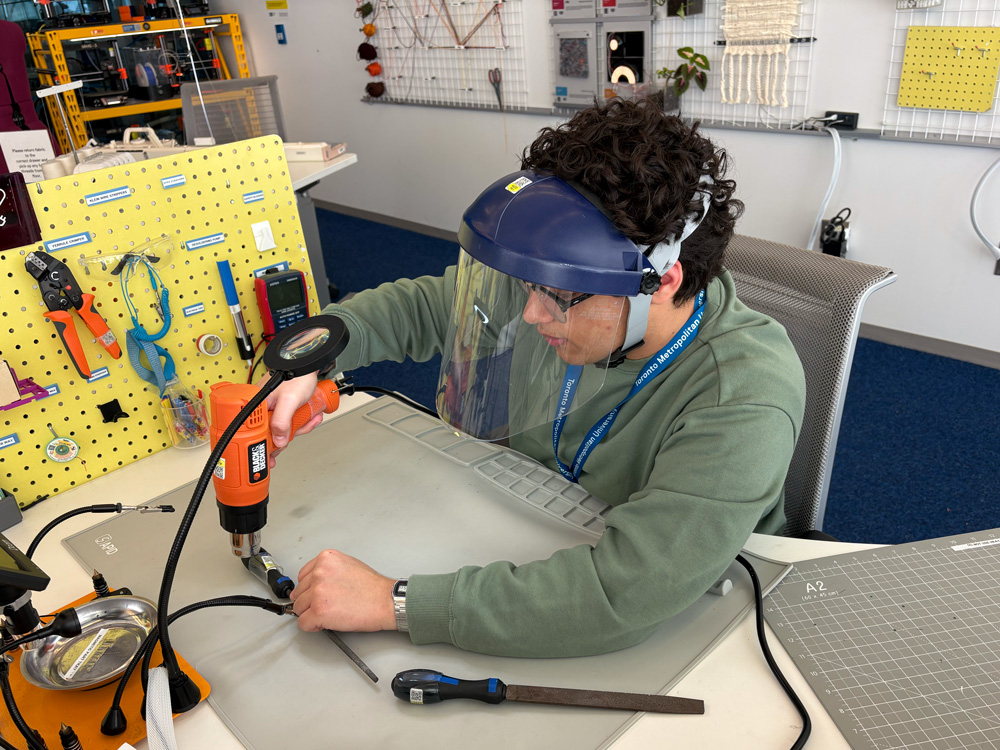
At the DME Lab, we support creators by offering a learning environment that is as safe as it is technically equipped. Even though the Lab is a light duty makerspace, all equipment and resources, if misused, could injure users or damage facilities.
All users making projects with SLC 308 fabrication equipment must review the equipment (hazards) and safety measures (controls) on this page. Should you choose to use any DME Lab resources, you must complete the University’s lab activities waiver below.
Your Role
Safety is a shared responsibility. DME Lab staff provide safe equipment and training. Lab users, in turn, are expected to:
- Follow standard operating procedures and equipment-specific training received at workshops,
- Follow check in and out procedures,
- Review all outside consumables with Lab staff (e.g., solder flux, solvents).
- Report damaged equipment and safety concerns immediately.
Report all safety-related concerns, near-misses, and incidents to James Loney (jloney@torontomu.ca), Office: SLC 309 (inside the DME Lab).
Safety Waiver Steps
After completing these required steps, you can reserve DME fabrication resources with a required safety training component:
- Review the hazard documentation specific to your desired service(s).
- Register for our D2L Training Space.
- Complete the the lab activities waiver.
- Attend an equipment-specific training workshop.
DME Equipment Hazards & Controls
-
Soldering & Electronics
-
3D Printers
-
Assembly Stations
-
Laser Cutter
-
Powered Hand Tools
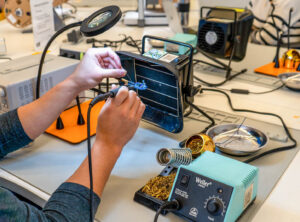 Soldering Workstation Safety & Guidelines
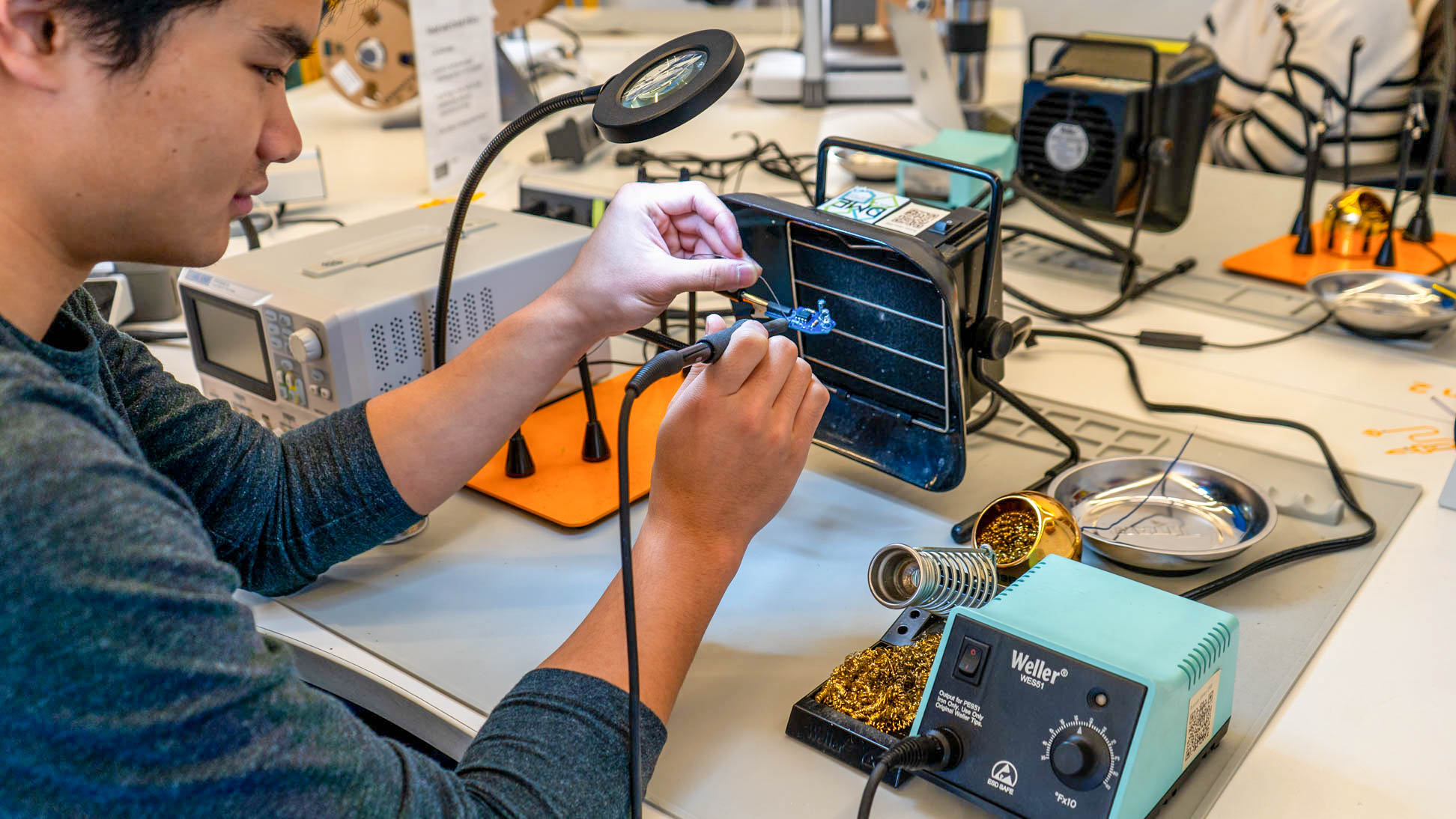
The DME lab feature safe, quality equipment to help beginners complete electronics projects! Soldering carries some limited risk: exposure to fumes, eye damage, stabs and cuts from improperly handled wires, accidental burns from touching the iron. However, we have safety and PPE controls in place to mitigate risks to workstation operators and nearby workstation users.
1. Before You Begin Working
- Get trained: If you are new to soldering, you must ask a staff member for a safety demonstration before starting. Better yet, reserve a spot in our hands-on workshop.
- Wear your required safety equipment: Always wear safety glasses (provided at the station).
- Always cut wires behind plastic guards: Avoid injuring someone nearby with flying wire tips or bits of solder.
- Use a silicone solder mat (stored in a rolled up state beside the soldering iron) at all times. Return it before you sign out from the soldering station
- Clear your work area: Keep the benchtop clear of clutter that can get stuck in your soldering iron.
- Fume extraction: Verify that the benchtop extractor fan is fully running before turning the soldering iron on.
- Check Your Material: Use only the provided lead or lead-free solder. Outside solder is not permitted unless stamped (with an approval stamp) by DME full-time staff.
- Zero Food/Drink: Keep all food and drinks completely away from this area.
2. As You Work
- Use DME Safety Features: including magnifiers and lighting to regularly monitor your project and work area.
- No LiPo Battery Work: Do not modify LiPo batteries inside the Lab, under any circumstances.
- Stay Focused: Treat the iron as hot at all times and return it to its designated stand when not actively melting solder.
- Report all health and safety incidents or near misses to a full-time staff member.
3. Checking Out:
Before you checkout from your work area at the front desk:
- Clean the Station: We provide a small vacuum and cleaning supplies. You must clear your work area after every use.
- Clean the Tools: Ensure the tools and surrounding workspace are cleaned for the next user.
- Wash Your Hands: Mandatory handwashing with soap and water after you’re done soldering.
Can’t find what you need?
Need to work with heavy gauge wires? Unsure of how to crimp that specialty component?? We have a variety of tips, tricks, and purpose-specific tools available in our storage room.
Do not take unnecessary risks with incorrect tools. Ask a staff member and we will get you exactly what you need—we enjoy sharing our help!
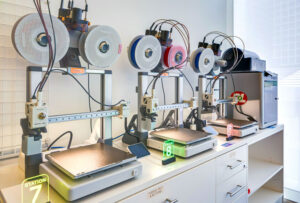 3D Printer Safety & Guidelines
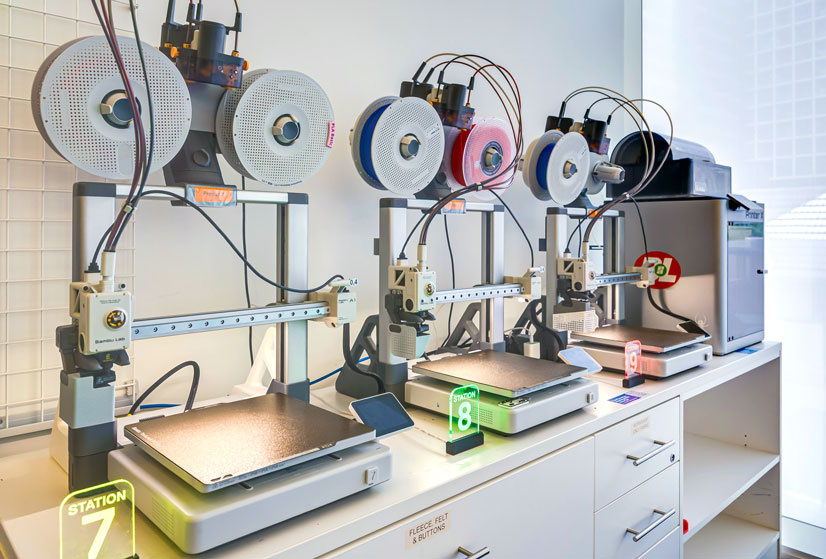
1. Before You Begin 3D Printing
At TMU, 3D Printing risks are described in our University's Environmental Health and Safety team's 3D Printing Resources kit.
2. DME Considerations
- Assess the work area before you use this tool. Is there anything behind, beside, under, or on top of the build plate?
- Low risk materials only: The DME Uses PLA and PETG materials only. Our facility is not ventilated for resin printers and ABS prints need to be scheduled on our X1-Carbon Printer after intermediate 3D printer training.
- Tie back long hair, loose clothing, and jewellery when around the 3D printers. No jewellery
- Do not touch the hot end (250°C) or build plate (60°C)
- Follow all small hand tool safety practices as demonstrated by staff.
Assembly Workstation Guidelines
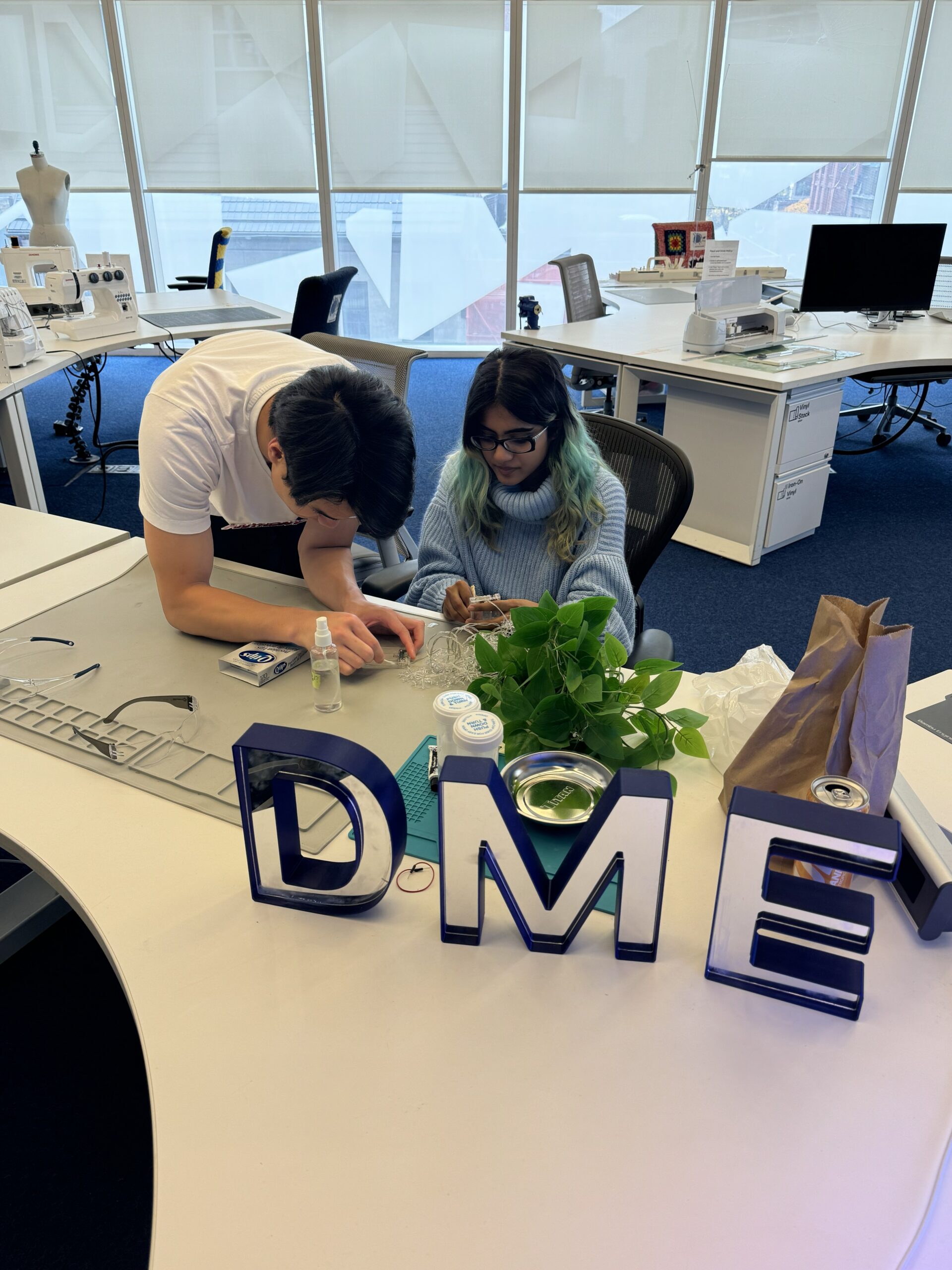
When correctly used, our tools keep you safety while protecting your creative work. Sharps are available from our storage room and available upon request. Note: our staff don't just hand out tools: they work with you to understand your end goal, propose solutions, and train you on proven safe use practices.
Sharps Hazards:
- Inventory: Bladed items (X-Acto Knives, Ergonomic box cutters), pointed ends (seam rippers, deburring tools)
- Powered Hand Tools (requires equipment-specific training by Lab Technician)
Controls:
- Table Clamps to secure your parts as you work on it.
- Anti-skid table mats, to protect your parts, our furniture, and those around you.
- A regular blade and tool maintenance program by full-time staff.
- Cleaning procedures / PPE
- Magnetic catch bins (e.g., for wire cut-offs).
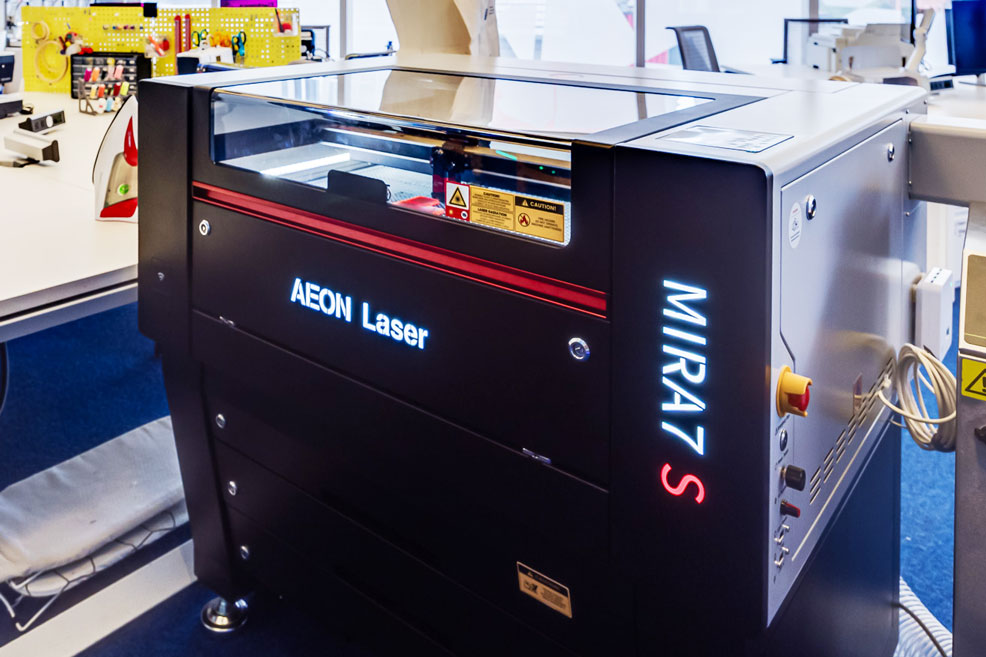
Class 1 Laser Cutter Guidelines
The lab features a CO2 laser for use with approved wood, acrylic, and cardboard "sheet" goods that arrive trimmed to size. Materials are limited to approximately 19" by 27" and we do not "pass through" longer material lengths.
Attend a required laser cutter orientation where we outline the approved workflow and required safety steps for each phase.
| Hazard | Control |
| Ventilation (particular matter, VOCs, gasses | BOFA Air Extractor |
| Materials (chlorine offgassing) | Approved materials list |
| Flame-ups / fire | Approved settings list, operator monitoring required when machine is cutting. Class ABC Extinguisher. |
| Electrical Circuit Load | 2x Circuits (20 AMP, 120 VAC) for laser, extractor. |
| Cuts & Sharps | When releasing semi-cut parts, wear eye protection and cut-proof gloves. |
At set times during the week, Lab users can attend specialized equipment consultations required to use hand tools. These orientations are helpful for those with projects that may require the use of specialized tools (i.e. hand drill, impact driver, handheld rotary tool). In this orientation session the DME Technician will assess your project needs and can orient you in the safe use of the following tools:
-
- Hand drill
- Impact driver
- Handheld rotary tool
- Hand Saw.
Participation in this training requires that you enroll in and complete the TMU's Machine and Equipment Safety training Module, in addition to completing the steps outlined in this page.
| Hazard | Control |
| Flying Particles | Safety Goggles and face shields |
| Cuts and Sharps | Cut resistant gloves, demonstration of safe and proper technique. |
| Noise Exposure | Ear protection |
| Pinch Points | Securing loose hair and fabrics, removing relevant accessories. |